Mold Removal in Lakeside, CO
Lakeside is a quarter-square-mile town on Sheridan Boulevard at 44th Avenue that Denver brewer Adolph Zang's syndicate incorporated in 1907 to get an amusement park outside Denver's liquor laws. The park opened the next year, the town counted sixteen residents in the 2020 census, and the handful of houses inside the limits sit on Lake Rhoda's shore beside the rides. Most of the people who say they live in Lakeside actually live across Sheridan in Denver's Berkeley neighborhood or across 44th in Mountain View.
The houses in and around the town are 1910s to 1940s cottages and bungalows with shallow basements and cellars dug near a lake, which means a damp wall most of the year and standing water after a wet spring. The original coal chutes and cellar windows were sealed decades ago, and a sealed cellar holds its damp.
Homeowners in Lakeside reach an independent local mold provider through this site's phone line. The provider reads the walls with a meter and tells you what the house needs; our part is the phone call.
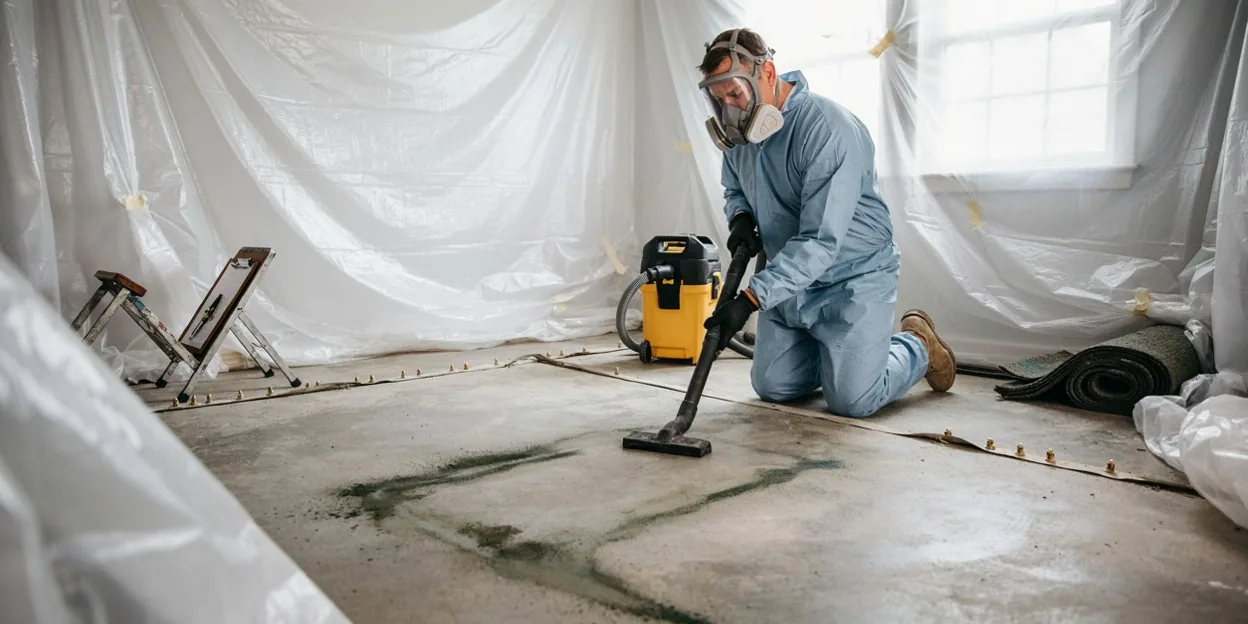
Lakeside mold removal in a cellar beside Lake Rhoda
A damp cellar wall under a 1920s cottage is mold removal. A cellar smell that comes up through the floor is mold odor removal. A furnace in that cellar pushing the smell upstairs is HVAC mold cleaning.
A wooden roller coaster older than most of the houses around it
Lakeside Amusement Park has run since 1908, its Cyclone coaster since 1940, and its Tower of Jewels still lights up over Sheridan every summer night; the town exists to hold it.
Call (720) 823-6943 and tell us what you see. We put you through to a local mold provider serving Lakeside.
Services Available in Lakeside
Mold Removal
Growth on a finished basement wall, behind a laundry room, or under a window well leak: room sealed, wet board cut to the meter line, framing HEPA-cleaned and dried.
Black Mold Removal
A dark patch on basement drywall or a bathroom ceiling handled by how far the water traveled, not its color: containment, porous material out, source fixed first.
Whole-Home Mold Remediation
A sump pump that quit during the melt or a supply line that ran for weeks, mapped floor by floor and cleared in zones as one project.
HVAC Mold Cleaning
Furnace cabinet, coil, humidifier pad, and return ducts cleaned when a basement air handler or a swamp cooler has been pushing damp air through the house.
Bathroom Mold Removal
Growth behind a vanity, under a shower pan, or on a ceiling with no fan, removed once the drain, supply line, or venting problem is fixed.
Attic Mold Remediation
Dark streaks on roof sheathing after hail, an ice dam, or a bath fan venting into the attic, cleaned and treated once the roof and the venting are corrected.
Mold Odor Removal
A musty basement in a house that looks fine, traced to wet carpet pad, a damp wall cavity, or a crawl space, then removed and treated at the source.
Mold Damage Repair
Drywall, insulation, baseboard, and carpet pad put back after removal, once the wall reads dry and the crack or leak that started it is repaired.