HVAC Mold Cleaning in Arvada, CO
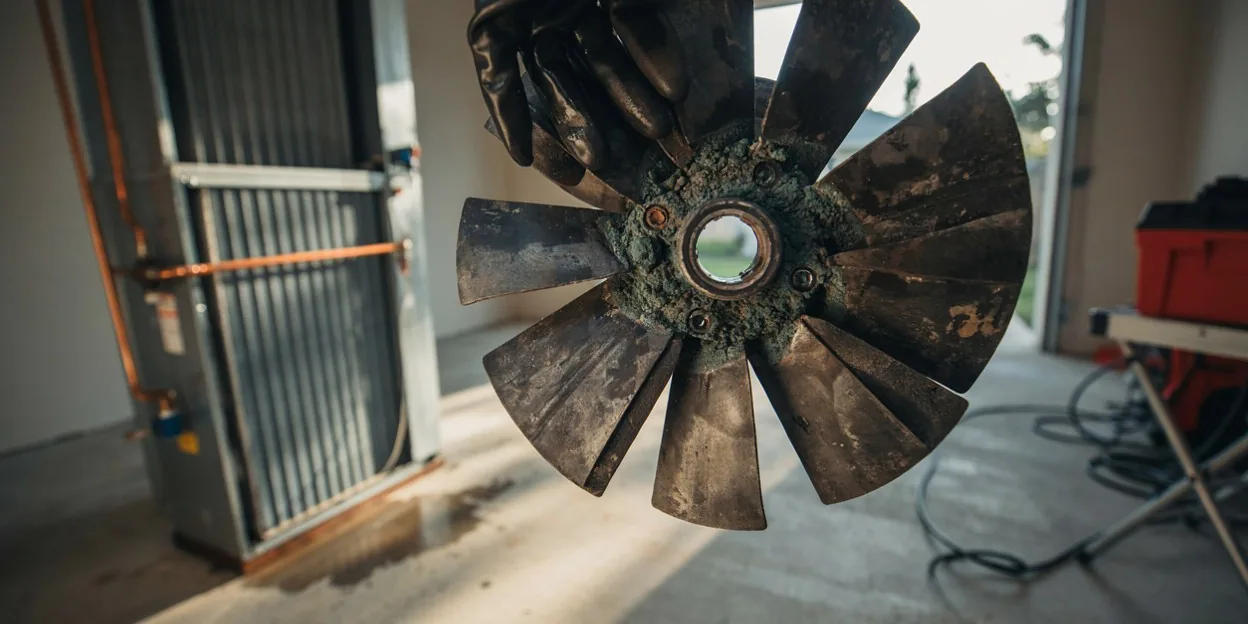
The house smells like a wet basement for the first five minutes after the furnace fires, then it fades until the next cycle. The furnace sits in a basement utility room with a bypass humidifier bolted to the side of the plenum, the pad inside is green and slimy, and the return duct runs along the same wall that got wet in the spring. This site connects you by phone with an independent local provider who does HVAC mold cleaning in Arvada and across Jefferson County.
Opening the cabinet, the humidifier, and the first six feet of return
The crew starts at the furnace with the power off. They open the blower compartment, pull the filter, and look at the blower wheel, the cabinet floor, and the AC coil above the heat exchanger for growth and standing water. Then they open the humidifier: the pad, the distribution tray, the drain line, and the plenum wall it mounts to, which in a Front Range basement is where most of the growth lives.
From there they trace the returns. A return duct that runs through a joist bay above a wet wall, or a panned return that uses the floor joists as its sides, pulls air across whatever is growing in that bay. If the house also has a rooftop or window evaporative cooler tied into the same ducts, the cooler's duct chase gets the same inspection.
Turn the fan to auto, pull the humidifier plug, change nothing else yet
Set the thermostat fan to auto so the blower is not running between cycles, and unplug or switch off the humidifier until the crew has seen it. Replace the furnace filter with the same size. Do not spray anything into the registers or the return; aerosol cleaners and fogging products put chemicals into the air stream without touching the growth in the cabinet.
Photograph the humidifier pad, the cabinet interior if you can see it safely, and any wet spot near the furnace. If the basement wall behind the furnace is damp, the furnace is a symptom and that wall is the job; see mold removal.
Blower, coil, pad, and plenum cleaned; ducts cleaned where they were wet
The utility room is sealed with plastic and a HEPA scrubber runs during the work. The blower wheel and housing are pulled and cleaned, the coil and drain pan are cleaned and the condensate line flushed, and the cabinet interior is HEPA vacuumed and wiped. The humidifier pad and tray are replaced, the plenum wall is cleaned, and if the humidifier housing itself is corroded or growing inside, the crew tells you it is time for a new one.
Flex and sheet-metal ducts that were wet are cleaned with agitation and HEPA-filtered negative air, and a panned joist return that has growth on the wood is cleaned as framing, the way a wall would be. Growth on roof sheathing around a swamp cooler chase is attic mold remediation. A smell that outlasts the equipment cleaning is mold odor removal. Drywall opened to reach a return is closed under mold damage repair.
Furnace humidifiers, swamp coolers, and basements with the returns in the floor
Arvada winters are dry enough that most houses here run a furnace humidifier from October to April, and a pad that is not changed each fall sits wet in a warm plenum for six months. Summers bring the opposite problem in the older brick ranches of Lamar Heights, Alta Vista, and Hackberry Hill, where a rooftop or window swamp cooler pushes damp air through the same ducts the furnace uses, and the chase stays wet until the cooler is drained in September. Panned joist returns are standard in the 1950s to 1970s houses, so a wet basement wall and a return are often the same thing.
Colorado has no mold license, and the provider represents its own training. Replacing a furnace, a humidifier that is hard-wired, or a condensate pump is licensed mechanical or electrical work with a City of Arvada permit. If someone in the house has been having breathing trouble, tell your doctor what you found; the crew cleans the equipment and does not make health findings.
Calling about a furnace that smells when it starts
Have the address, the age of the furnace, whether it has a humidifier and when the pad was last changed, and whether the house runs a swamp cooler in summer. Say whether any basement wall near the furnace has been wet. Call (720) 823-6943.