Mold Removal in Applewood, CO
Applewood is the unincorporated Jefferson County neighborhood between Golden, Wheat Ridge, and Lakewood, south of I-70 along 32nd Avenue, with about 7,800 residents in 1950s to 1970s brick ranches and split-levels on big lots, many of them backing onto the old orchard ditches that gave the area its name. The May 8, 2017 hailstorm passed directly over Applewood between Golden and Wheat Ridge.
The lots are large and the houses are long and low, so roofs collect a lot of hail and downspouts have a long way to run. Basements are full, usually finished in the 1980s, and sit on clay that moves every spring. A long ranch also hides a long run of foundation wall behind paneling, and one crack halfway along it can stay wet for years unnoticed.
Homeowners in Applewood reach an independent local mold provider through this site's phone line. The provider reads the walls with a meter and tells you what the house needs; our part is the phone call.
Applewood mold removal in a long brick ranch on a half-acre lot
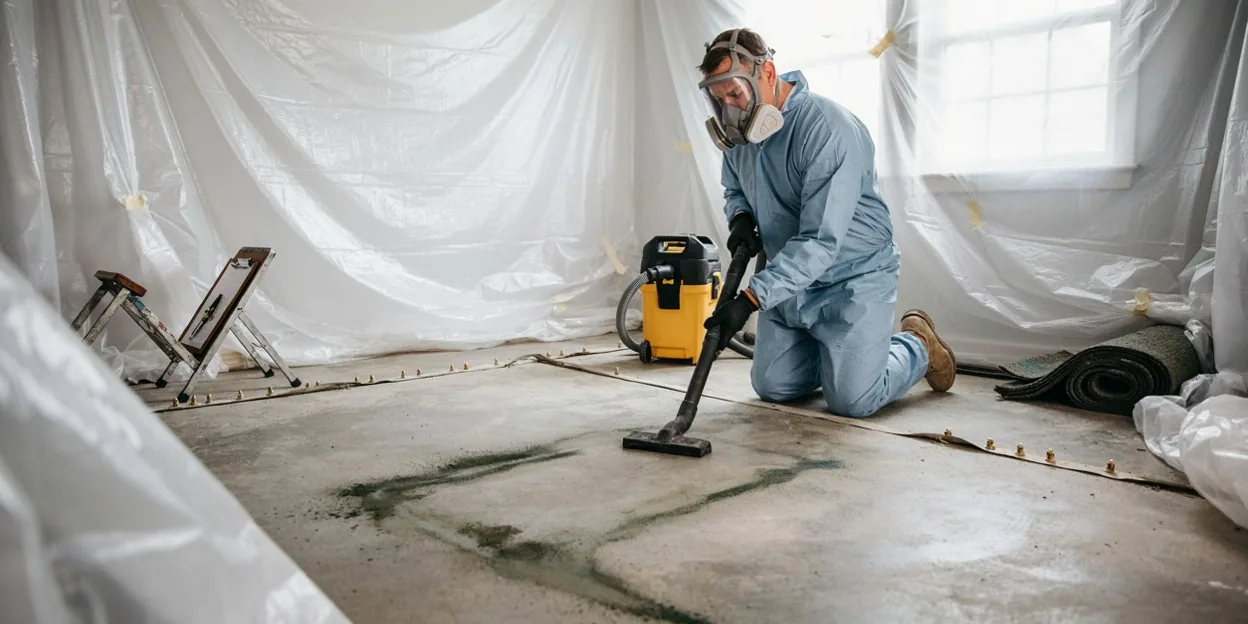
Sheathing streaked under a roof that took the 2017 hail is attic mold remediation. A finished basement rec room with a wet bottom plate is mold removal. A lower level that smells after every spring storm is mold odor removal.
Water from a company its customers own
Applewood's tap water comes from Consolidated Mutual Water Company, a customer-owned utility founded in 1926 that serves parts of Lakewood, Wheat Ridge, and central Jefferson County through about four hundred miles of pipe, and a jump on the water bill is often the first sign of a line leaking under a slab here.
Call (720) 823-6943 and tell us what you see. We put you through to a local mold provider serving Applewood.
Services Available in Applewood
Mold Removal
Growth on a finished basement wall, behind a laundry room, or under a window well leak: room sealed, wet board cut to the meter line, framing HEPA-cleaned and dried.
Black Mold Removal
A dark patch on basement drywall or a bathroom ceiling handled by how far the water traveled, not its color: containment, porous material out, source fixed first.
Whole-Home Mold Remediation
A sump pump that quit during the melt or a supply line that ran for weeks, mapped floor by floor and cleared in zones as one project.
HVAC Mold Cleaning
Furnace cabinet, coil, humidifier pad, and return ducts cleaned when a basement air handler or a swamp cooler has been pushing damp air through the house.
Bathroom Mold Removal
Growth behind a vanity, under a shower pan, or on a ceiling with no fan, removed once the drain, supply line, or venting problem is fixed.
Attic Mold Remediation
Dark streaks on roof sheathing after hail, an ice dam, or a bath fan venting into the attic, cleaned and treated once the roof and the venting are corrected.
Mold Odor Removal
A musty basement in a house that looks fine, traced to wet carpet pad, a damp wall cavity, or a crawl space, then removed and treated at the source.
Mold Damage Repair
Drywall, insulation, baseboard, and carpet pad put back after removal, once the wall reads dry and the crack or leak that started it is repaired.